What is Digital Marketing? A Complete Beginner’s Guide (2026)
Introduction
Imagine opening a new business today without creating a website, social media page, or Google Business Profile. It would be almost impossible for customers to find you. Before buying a product or hiring a service, most people search online, compare reviews, watch videos, and read blog articles. This change in consumer behavior has made digital marketing one of the most valuable business tools in the modern world.
Digital marketing is no longer only for large companies with huge advertising budgets. Small businesses, startups, freelancers, and even personal brands can now compete with established companies by using the right digital marketing strategies. In 2026, technologies like Artificial Intelligence (AI), automation, voice search, and personalized content are changing how businesses communicate with customers. Understanding digital marketing is no longer optional—it’s essential for anyone who wants to grow online.
What is Digital Marketing?
Digital marketing is the process of promoting products, services, or brands through online platforms such as search engines, websites, social media, email, mobile applications, and digital advertising. Unlike traditional marketing, digital marketing allows businesses to reach the right audience, measure campaign performance in real time, and continuously improve their marketing strategies based on customer data.
Whether someone searches for a nearby restaurant, watches a product review on YouTube, or clicks on an Instagram advertisement, digital marketing influences almost every online decision. It connects businesses with customers wherever they spend their time online and creates meaningful interactions that can lead to trust, loyalty, and sales.
Why is Digital Marketing Important in 2026?
The digital world is evolving faster than ever. Consumers expect businesses to be available online, provide valuable information, respond quickly, and deliver personalized experiences. Companies that fail to embrace digital marketing risk losing customers to competitors with a stronger online presence.
Digital marketing offers several advantages that make it an essential investment for businesses:
- Reach customers across different cities, countries, and even globally.
- Build trust through high-quality content and customer reviews.
- Increase website traffic using Search Engine Optimization (SEO).
- Generate qualified leads through targeted campaigns.
- Improve customer engagement through social media platforms.
- Measure campaign performance with detailed analytics.
- Achieve higher returns on investment compared to many traditional marketing methods.
- Adapt quickly to changing market trends and customer behavior.
These benefits make digital marketing one of the most effective ways to grow a business in today’s competitive environment.
The Core Components of Digital Marketing
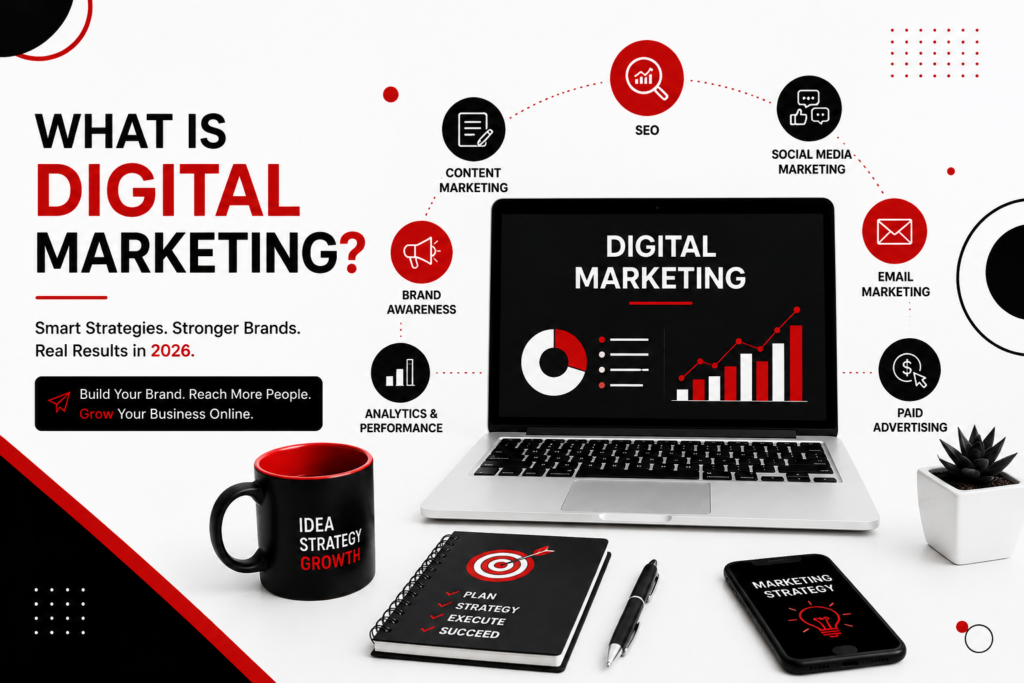
Digital marketing consists of several interconnected strategies, each serving a unique purpose in attracting, engaging, and converting customers.
Search Engine Optimization (SEO)
SEO is the process of optimizing a website so it appears higher in search engine results. A well-optimized website attracts organic traffic without relying solely on paid advertising. Businesses that invest in SEO create content that answers users’ questions, improve website speed, optimize images, and build credibility through quality backlinks.
Content Marketing
Content marketing focuses on creating valuable information that educates, inspires, or solves customer problems. Blogs, videos, case studies, infographics, and guides help businesses establish authority while improving their search engine rankings. High-quality content also encourages visitors to spend more time on a website, increasing the chances of conversion.
Social Media Marketing
Social media has become one of the most powerful communication channels for businesses. Platforms such as Instagram, Facebook, LinkedIn, YouTube, and X enable brands to engage with audiences, share stories, build communities, and increase brand awareness through both organic and paid content.
Email Marketing
Despite the growth of social media, email marketing remains one of the highest-performing digital marketing channels. Personalized email campaigns help businesses nurture leads, maintain customer relationships, and encourage repeat purchases through valuable content and exclusive offers.
Paid Advertising
Paid advertising allows businesses to gain immediate visibility on search engines and social media platforms. Through platforms like Google Ads and Meta Ads, businesses can target specific audiences based on demographics, interests, location, and online behavior, ensuring their marketing budget reaches the most relevant customers.
Emerging Digital Marketing Trends in 2026
The digital marketing landscape continues to evolve with technological advancements. Businesses that embrace these trends will be better positioned for long-term success.
Some of the most influential trends include:
- Artificial Intelligence for content creation and customer support.
- Voice search optimization for smart devices.
- Personalized customer experiences using behavioral data.
- Short-form video marketing through platforms like Instagram Reels and YouTube Shorts.
- Marketing automation to improve efficiency.
- Interactive and user-generated content.
- Privacy-focused marketing strategies built on first-party data.
- Local SEO to attract nearby customers.
Keeping up with these developments helps businesses remain competitive in an increasingly digital marketplace.
Common Mistakes Businesses Should Avoid
While digital marketing offers tremendous opportunities, many businesses struggle because they overlook fundamental best practices. Common mistakes include publishing inconsistent content, neglecting SEO, ignoring website performance, failing to understand customer search intent, and relying solely on paid advertisements without building organic visibility.
Avoiding these mistakes and focusing on delivering genuine value to customers creates a stronger foundation for sustainable online growth.
Final Thoughts
Digital marketing is more than a collection of online tools—it is a complete strategy for connecting businesses with people in meaningful ways. As consumer behavior continues to shift toward digital platforms, organizations that invest in SEO, content marketing, social media, email marketing, and data-driven decision-making will have a significant competitive advantage.
Whether you are a student beginning your digital marketing journey, a freelancer building a personal brand, or a business owner looking to expand your reach, understanding digital marketing is one of the most valuable investments you can make in 2026. By focusing on creating helpful content, understanding your audience, and adapting to new technologies, you can build lasting relationships with customers and achieve sustainable business growth in the digital age.